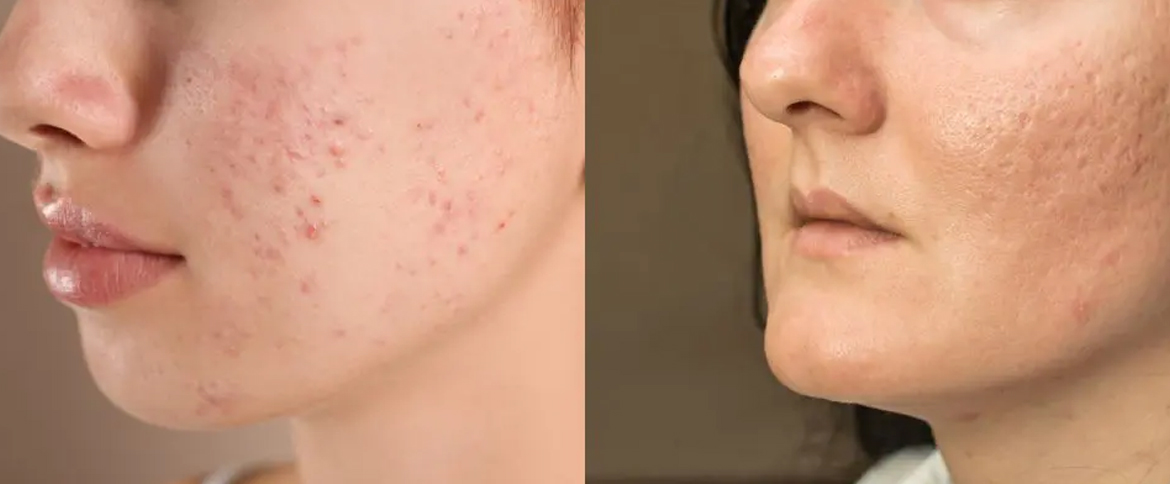
Acne, acne marks, and acne scars are among the most common
skin concerns affecting teenagers and adults. With the
right diagnosis and treatment plan, acne can be controlled
and the appearance of marks and scars can be significantly
improved.
Acne
Acne is a common inflammatory skin condition that
develops when hair follicles become clogged with
excess oil, dead skin cells and bacteria. It commonly
affects the face but may also occur on the neck,
chest, back and shoulders.
-
Acne may appear as blackheads, whiteheads,
pimples, pustules, nodules or cysts.
-
Hormonal changes, genetics, stress, certain
medications and unsuitable skincare products
can contribute to acne.
-
Treatment is selected according to the type,
severity and cause of acne.
-
Depending on the condition, treatment may include
topical medicines, prescription medications,
chemical peels or other dermatological procedures.
Acne Marks
Acne marks are flat areas of discoloration that may
remain after an acne lesion has healed. These marks
are often referred to as post-inflammatory
hyperpigmentation or erythema, depending on their
appearance.
-
Marks may appear pink, red, brown or darker than
the surrounding skin.
-
They may gradually fade over time, although the
process can take several weeks or months.
-
Dermatologists may recommend suitable topical
treatments and procedures depending on the
patient's skin type and pigmentation.
-
Regular use of broad-spectrum sunscreen is
important to reduce further pigmentation.
Acne Scars
Acne scars can develop when deeper layers of the skin
are damaged during severe or prolonged acne. Unlike
temporary acne marks, scars may cause permanent
changes in skin texture.
-
Atrophic scars appear as depressions or indentations
in the skin.
-
Common types include ice-pick, boxcar and rolling
scars.
-
Raised scars, known as hypertrophic scars, may also
develop in some individuals.
-
Treatment depends on the type, depth and severity
of the scar.
Treatment Options for Acne Scars
A dermatologist can assess your skin and recommend an
individualized treatment plan. Depending on the scar
type and skin condition, treatment options may include:
-
Topical Treatments:
Selected creams and gels may help improve mild
pigmentation and certain superficial scars.
-
Microdermabrasion:
A skin resurfacing procedure that helps improve
overall skin texture and appearance.
-
Chemical Peels:
Controlled exfoliation can help improve
pigmentation, uneven texture and selected
superficial acne scars.
-
Microneedling:
Controlled micro-injuries stimulate the skin's
natural healing response and collagen production.
-
Laser Treatments:
Selected laser procedures can help improve
pigmentation, skin texture and the appearance
of certain acne scars.