Keloids and scars can develop after injuries, surgeries, burns, acne or other skin conditions. While scars are a natural part of the healing process, some may become raised, thickened, itchy or uncomfortable. Dermatological treatments can help improve their appearance, texture and associated symptoms.
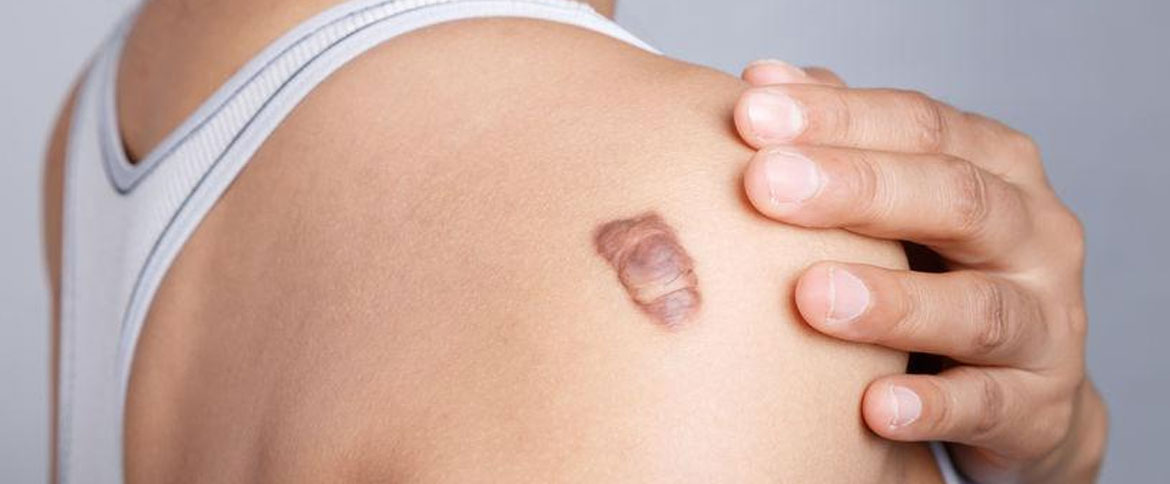
Keloids are a type of raised scar that extends beyond the original boundaries of a wound. They develop due to an overproduction of collagen during the healing process. Other scars may remain flat, become depressed or develop changes in colour and texture. Early assessment can help determine the most appropriate treatment approach.
Scars can vary significantly depending on the type of injury, location, skin type and individual healing response.
Silicone-based gels and sheets may be recommended for selected scars as part of scar management. With consistent use, they can help improve scar hydration, texture and appearance.
Intralesional corticosteroid injections may be used for selected raised scars and keloids. The medication is injected directly into the scar tissue to help reduce inflammation and excessive scar formation.
Cryotherapy uses controlled freezing to treat selected raised scar tissue. It may be considered for appropriate keloids and hypertrophic scars to help reduce their size and thickness.
Certain laser-based treatments may be considered to improve the colour, texture and appearance of selected scars. Treatment is chosen according to the type, maturity and characteristics of the scar.
Pressure therapy may be recommended in selected cases to help manage raised scars. Consistent application of appropriate pressure can contribute to scar flattening and softening over time.
Surgical removal may be considered for selected large or persistent keloids and scars. Since keloids can recur after surgical removal, additional preventive treatment may be recommended as part of the overall management plan.
No single treatment is suitable for every scar. The treatment approach depends on the scar type, size, location, age, symptoms, skin type and previous treatments.
Dr. Maina provides personalized evaluation and treatment for keloids, raised scars and other scar-related concerns. Early assessment and an appropriate treatment plan can help improve scar appearance, texture and associated discomfort.