Hair transplant is a surgical hair restoration procedure designed to improve the appearance of thinning areas, receding hairlines, and pattern hair loss. Healthy hair follicles are carefully transferred from a suitable donor area to areas affected by hair loss to achieve natural-looking and long-lasting results.
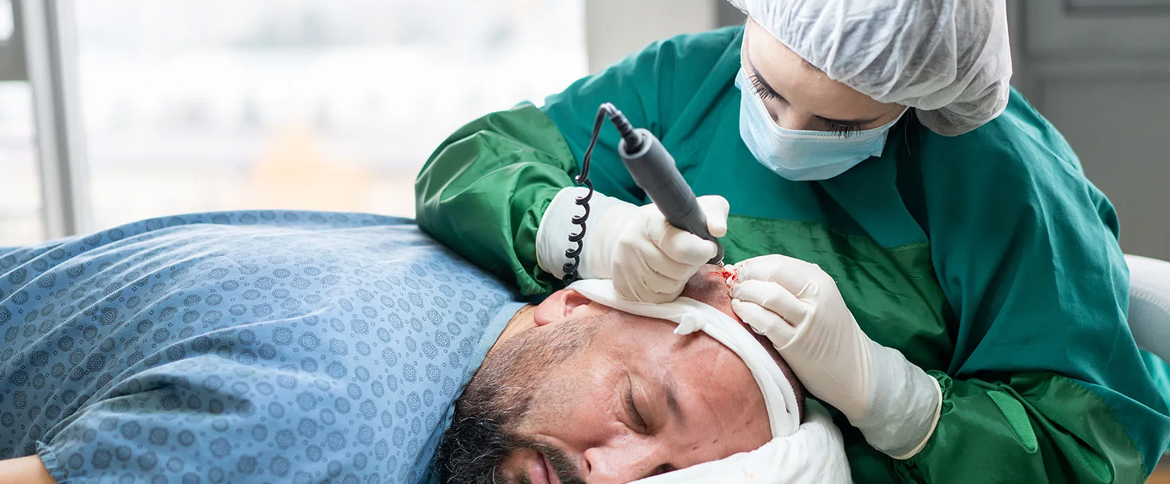
Hair transplantation involves relocating healthy hair follicles from a donor area, usually the back or sides of the scalp, to areas where hair density has reduced. The transplanted follicles are placed carefully to create a natural hairline and improved overall hair density.
A detailed assessment is important before treatment to determine the cause and pattern of hair loss, donor hair availability, scalp condition, and the most appropriate restoration approach.
Two commonly used approaches for hair transplantation are Follicular Unit Transplantation (FUT) and Follicular Unit Extraction (FUE). The suitable technique depends on the patient's hair characteristics, donor area, degree of hair loss, and treatment goals.
Hair transplantation is generally performed under local anaesthesia. The exact duration depends on the number of grafts required and the complexity of the procedure.
Recovery varies from person to person. It is normal for the transplanted hair shafts to shed during the early stages after the procedure. This does not necessarily indicate failure of the transplant, as new growth develops gradually from the transplanted follicles.
Hair growth after transplantation is gradual. Newly transplanted follicles generally require several months to produce visible growth, and the final appearance develops progressively over time.
The outcome depends on factors such as the cause and extent of hair loss, donor hair quality, follicle characteristics, treatment planning, individual healing, and adherence to post-treatment care.
Hair transplant is a surgical procedure and should be planned only after a detailed assessment of the scalp and hair loss pattern. Potential risks may include temporary swelling, bleeding, infection, scarring, altered sensation, or an unsatisfactory cosmetic result.
Choosing an appropriately qualified and experienced hair restoration professional and following the recommended aftercare can help support a safe procedure and natural-looking outcome.
Every patient's hair loss pattern and donor capacity are different. A detailed consultation and personalized treatment plan help determine the appropriate technique, graft requirement, hairline design, and restoration strategy for natural-looking results.